INTRODUCTION
History constantly shows us that man can be prone to many concessions to establish his own state of well-being. The philosopher Jean-Jacques Rousseau captured, as early as the 18th century, an exhaustive definition of the human condition, inspired by constructivism: "Man is born free and everywhere he is in chains." [1]. In tandem with this we can visualize both the condition of the individual in the social plane, his relationship to norms, authority relations, and his own capacity to place himself in relation to the constraints that shape his behavior. Nor can we omit from the context the positive implications of normative 'chains' in sculpting people's public attitudes. They can act as censors, as agents of predictability in a society where rights and freedoms are respected.
The totalitarian regimes of the 20th century are clear evidence of both human capacities to systematize violence and to shape the truth to undermine consciousness. Terror, fear, and grief - just a few of the feelings that robbed the Jewish community around the world of its development and love of life during the inexorable course of the Holocaust. Coexistence, seemingly an impediment to the future of the Aryan race, marked the past, future and present of the many survivors who clung to life. Today, in a world that is technologized and more tolerant of the nuances of multiculturalism, attitudes that validate extremist and anti-Semitic practices are still evident. For this reason, the commemoration of the Holocaust and its victims is for every state actor a celebration dedicated to education, forgiveness and preventing the repetition of actions in this sphere.
The Holocaust can be defined as the systematic, state-sponsored murder of Jews and other minorities by the Germans and their collaborators during World War II [2, p. 119]. The dimensions of the phenomenon, the practices of SS personnel and the attitude of the international community in analyzing the implications are some of the dimensions of reference in the literature. The speech of Holocaust survivor Elie Wiesel is a landmark for the way the "Jewish question" was subsequently handled and publicized worldwide. The impact on political leaders, the media coverage of survivors' stories, and the formation of Israel's status are clear landmarks that transcend to the present day. To analyze Elie Wiesel's speech entitled "The Perils of Indifference", this paper will follow the proportions of a scholarly article. The first part will review the literature and define the main concepts. The methodology section will outline the method of analysis used for the speech. The analysis section will prioritize the main themes addressed, the context in which the discourse is carried out, and the type of audience to which it is addressed.
THEORETICAL FRAMEWORK
This theoretical section will focus on defining the main concepts (communication and strategic communication), reviewing the literature and the analytical framework (where the main directions of analysis of this discourse will be outlined).
Communication and strategic communication
Communication is a concept whose presence is almost permanent in people's lives. All human and institutional interactions are mediated by the principles of communication and, implicitly, the expressiveness conveyed through it. Recently, social scientists have pointed out that "organizations are constituted in and through human communication", an entirely different way of expressing the importance of communication and its impact on the various issues that are addressed [3, p. 1150]. When we talk about organizations, whether local, national or international, we refer to communication as an organizing principle, as a vehicle by which "organizations are established, composed, designed and sustained" [3, p. 1150].
Defined by some authors as a "process of transmitting information and common understanding from one person to another", communication can establish links between the speaker and the target environment, all through the quality of the messages conveyed [4, p. 1]. However, a significant part of the literature focuses on organizational communication, especially in the business area, where the competitive market leaves its mark on companies' marketing strategies. But communication is equally important at the contextual level, where political leaders or opinion formers can interact directly with target audiences. Press conferences, lectures or even events commemorating historical events can leave their mark on the public or raise awareness about certain realities.
As a distinct discipline, communication has taken on its own history since the 20th century when persuasion (especially in the political and social areas) was assimilated into a separate rhetoric [5, p. 502]. Among the first universities to introduce communication courses into the curriculum were the University of Iowa and the University of Wisconsin, which emphasized the importance of communication skills for professional persuasion [5, p. 502]. Transposing us into the contemporary world, communication today is a multifaceted concept. We talk about organizational communication (in various forms: top-down, bottom-up, horizontal or lateral, diagonal), about communication according to the ways in which information is transmitted (written, verbal or non-verbal) but also about formal or informal when we refer to the degree of formalization [6, pp. 20–21].
Associated with various fields of study, but also with everyday human activity, communication as a concept has often interfered with the quality principles of speech acts [7, p. 10]. Moreover, according to Nilsen's approach, the definitions formulated around the concept of "communication" refer either to a "the process of communication to those stimulus-response situations in which one deliberately transmits stimuli to evoke response" and the second category includes "the area of communication stimulus-response situations in which there need not be any intention of evoking response in the transmission of the stimuli" [7, pp. 10–11]. Although this approach seems to be directed at psychology and, by implication, cognitive issues, the applicability of the findings is broad. Communication is portrayed both from an interactive, language-response perspective and from what Smith calls communicative behavior [7, p. 11]. In short, communication is a reality, a ubiquitous presence in the lives of people and organizations. Whether we are talking about internal or external communication, the construction of the discursive act has the role of motivating, arguing, and supporting realities or desires. Associated with communication strategies we also find the term strategic communication which maximizes the use of communication to achieve an objective/purpose. Defined as "the purposeful use of communication by an organization or other entity to engage in conversations of strategic significance to its goals", strategic communication is targeted, layered according to different contexts [8, p. 493]. The nature of the entity may take the form of a public institution, an NGO, or a company. Implicitly, international organizations also carry out strategic communication both in terms of interaction with member states and those outside the organization, as well as with civil societies. But it is not only organizations that can carry out strategic communication. Public individuals can focus significant proportions of the public when they convey messages or translate their feelings about a particular event. As we will see in this paper, the writer Elie Wiesel succeeded in various communication contexts in captivating audiences, both through the quality of the messages he conveyed and the structure of his discourse.
Literature review
Humanity's milestones are often debated publicly and socially and thus remain in the collective memory. After the end of the Second World War the subject of the Holocaust received intense media attention from several perspectives. On the one hand, the international community began an extensive process of condemnation of all SS soldiers who had been involved in what the literature called "death camps". Other related issues concerned the migration of the Jewish community, the over-politicization of certain topics, and the originality of the sources of communication in the public space [9, p. 8]. While for many survivors the subject remained a memory of the past (which they did not talk about with their own families), the media used some narratives to generate international reactions. Thus, typologies of Holocaust representation have steadily diversified, from films, memoirs and literature to commemorative events and educational practices [9, p. 9]. It is important to stress that public attention in this context was not only drawn to the atrocities at Auschwitz (or other camps associated with the phenomenon). There has been a broad process of remembering other acts of genocide through the lens of historical narratives. Moreover, clinical studies with survivors have shown that they "continue to suffer its effects, both physically and psychologically"[10, p. 914], an element that generates maladjustment to new social contexts, strained relationships with family members or even paranoia.
Because the Holocaust was a phenomenon in which atrocities were an inexorable part of reality, clinicians wanted to investigate human behavior after such experiences, the role of communication in different contexts. The results indicated that gender differences are important in the family relationships of this target group, identifying different degrees of depression, guilt or even hypochondria [10, p. 914]. As we can see, the subject of survivors can involve many typologies and contexts of communication. On the one hand, we can identify the reverberations of experiences lived in family or social relationships. On the other hand, the media coverage of the subject by various entities (politicians, press, writers, etc.) brings to the fore a rhetorical dimension to the subject. During the Cold War period and in the first decades of the new century, Holocaust survivors were given a special priority in studies investigating the phenomenon. Among them, Elie Wiesel stood out for his human rights activism and his receipt of the Nobel Peace Prize. In one of his books, he states: "The Holocaust was so huge, so incredible that it is a unique event. There can be no other event like it" [11, p. 1].
As a survivor and human rights activist, Elie Wiesel surprised the international community with his direct, reasoned communication and carefully crafted analyses associated with the Holocaust. The main themes that can be identified in his speeches are changing the collective mindset through analysis of the past, aggressor-victim relations, the positions of world leaders on Jewish issues, the beginning of a new millennium. In the section entitled "analytical framework" I will portray the main themes of analysis identified in the literature according to a deductive thematic approach. These analytical frameworks will play a major role in understanding the messages conveyed by the writer in the "The Perils of Indifference" discourse.
Analytical framework
The subject of the Holocaust has many implications for public communication. The messages conveyed, the position of political leaders, but also elements of oral history are elements that can be prioritized in a discourse analysis. However, because Elie Wiesel is first and foremost a survivor, we have identified several recurring themes in his writings that refer to both state leadership and social awareness processes. In many of the linguistic constructions associated with the writer we capture the note of uniqueness that he gives to the Holocaust as a phenomenon, both in terms of its scale and especially in terms of the inhumane treatment meted out in the concentration camps. In the figure below I have portrayed the main analytical dimensions that I will pursue in the paper.
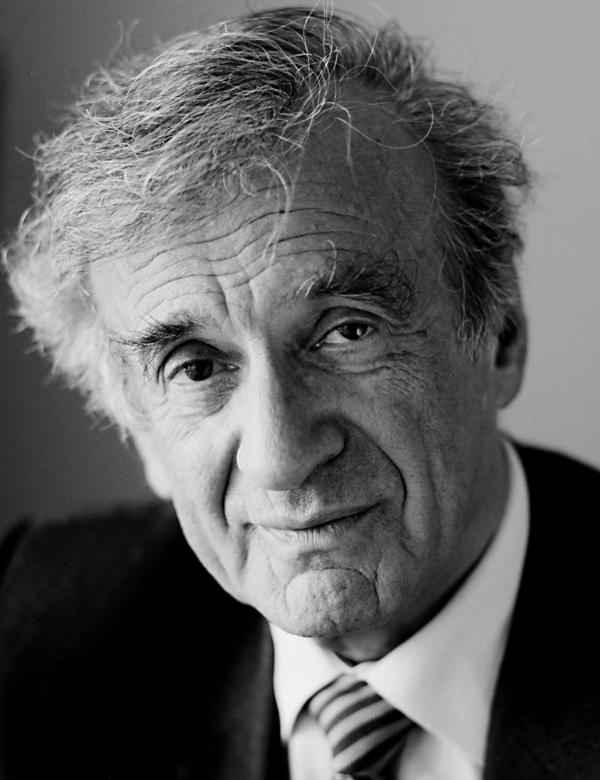
(Photo source: National Endowment for the Humanities, https://www.neh.gov/about/awards/national-humanities-medals/elie-wiesel )
METHODOLOGY
As a tool that is a cornerstone and supporting pillar of each discipline [12, p. 4], research provides that way of knowing and detailing events/problems in various fields in order to identify answers. The methodological aspects are necessary to structure a work and involve both an epistemological component (to ensure the validity of the conclusions) and an ontological one whereby "objects" are established about which " which questions may validly be asked and conclusions may be drawn" [13, p. 175]. The existence of two styles of research, "qualitative" and "quantitative" has created different logics of approach in the study of social sciences [14, p. 3]. The major differences are, as the name suggests, that "Quantitative research uses numbers and statistical methods" while qualitative research "covers a wide range of approaches" [14, p. 4]. Research is not just about the process of gathering information, its objective is to answer unanswered questions or to create what does not currently exist [15, p. 1]. The qualitative nature of a study highlights both the work of researchers to gather data and to "generally unearth enormous amounts of information from their studies" [14, p. 4].
Case selection
Elie Wiesel's speech entitled "The Perils of Indifference" is representative of the Holocaust issue at the level of awareness. It is addressed to a wide audience in a context of commemoration. The main messages conveyed are human indifference to suffering, the systematization of the lessons of the past, and the rhetorical condemnation of Franklin Delano Roosevelt's leadership of non-involvement in the problem of Jews arriving in the United States. From a theoretical point of view, the extreme/prototype case emphasizes the negative or positive characteristic rendered by the rarity that makes a case valuable [16, p. 301].
Data collection method
The data for this paper are the texts and documents containing Elie Wiesel's speech mentioned above. The main priority in the analysis will be the content of these texts, the use of words or linguistic expressions that can be circumscribed, in terms of intention, to strategic communication.
Data analysis method
Two types of data analysis methods will be used in this paper: discourse analysis and deductive thematic analysis. While the former is defined as "the study of language viewed communicatively and/or communication viewed linguistically" (with a researcher focus on "interaction, context, function, tools and text") [17, p. 21], the second extracts the most common themes found in the literature, generates codes deductively and correlates the collected data accordingly. The deductive approach, also used in the analysis part of this paper, depending on the researcher's purpose, is correlated with either testing a previous theory or comparing categories in different periods [18, p. 4]. Thus, when a deductive thematic analysis is applied it operates from the "top down", there is a theory and the themes are derived from the literature [19, p. 22].
| Topic | Codes/Subtopics | Sentences matching codes |
|---|---|---|
| Collective memory | The implications of indifference | "In the place that I come from, society was composed of three simple categories: the killers, the victims, and the bystanders." "Over there, behind the black gates of Auschwitz, the most tragic of all prisoners were the Muselmänner, as they were called. Wrapped in their torn blankets, they would sit or lie on the ground, staring vacantly into space, unaware of who or where – strangers to their surroundings. They no longer felt pain, hunger, thirst. They feared nothing. They felt nothing. They were dead and did not know it." |
| Collective memory | International attitudes | "...The depressing tale of the 'St Louis' is a case in point. Sixty years ago, its human cargo - nearly 1,000 jews - was turned back to Nazi Germany.(...) Roosevelt was a good man, with a heart. (...)Why didn't he allow these refugees to disembark?" |
| The camp experience | Status of children | "Their fate is always the most tragic, inevitably. When adults wage war, children perish. (...) Every minute one af them dies of disease, violence, famine." |
| The camp experience | Education and awareness | "We are on the threshold of a new century, a new millennium. (...) Surely it will be judged, and judged severely, in both moral and metaphysical terms." |
| The legacy of new generations | Change | "(...)good things have also happened in this traumatic century: the defeat of Nazism, the collapse of Communism, the rebirth of Israel on its ancestral soil, (...)" |
ANALYSIS
In the table above we can see some of the main themes addressed by Elie Wiesel in his speech. In the following I will summarize some implications of the critical discourse analysis to establish, in relation to the text, the following aspects: the context in which the speech is made and the prominent personalities participating in the event, the nature of the target audience, the structure and argumentation, the use of rhetorical and stylistic elements, the assessment of a possible impact on the audience.
Elie Wiesel's speech to the United States Congress in 1999 [20, p. 215]. According to studies that have also researched its impact on public opinion, the context is provided by a succession of conferences "marking the third millennium and held at the White House" [21, p. 74]. Their main aim was to provide an empirical x-ray of the events that marked the 20th century. The Holocaust, the two world wars are major themes that the guest also mentions as part of the sphere of historical lessons with an impact on future generations. Among the personalities taking part in the event are the Clintons and other US officials ("Ambassador Richard Holbrooke, members of Congress" [21, p. 75]. The distinguished guests and official leadership positions, the presence of American leadership in support of the speech, all make for a target audience with expertise, knowledge of the Holocaust and its implications for international law. Elie Wiesel thus addresses in a targeted way the representatives of the state who have supported democracy in Europe and the world. Sharing one's own experiences in concentration camps is part of strategic communication, a way to prevent the repetition of history in other events of humanity.
The structure of the speech follows the themes listed in the coding table. Elie Wiesel resorts to sketching an obvious contrast between the implications of indifference on two main levels (of the people in the camp to their own lives and of societies to the existence of the Holocaust) and the changes taking place in the world in anticipation of a new millennium. Within the linguistic structures addressed, direct reference is also made to one's own traumatic experiences in the camp, but also to the changes produced by them in the course of human evolution ("Fifty-four years ago to the day, a young Jewish boy from a small town in the Carpathian Mountains wake up, (...), in a place of eternal infamy called Buchenwald" [20, p. 216]). Returning to the structure of the discourse, according to studies that have analyzed the text, it can be stated that "the sections of the discourse reflect the classical structure of an ancient pleading" [21, p. 76], holding a series of inflection points and themes to capture the audience's emotions. Because the source of communication has the potential to influence opinions and attitudes (it is credible, attractive in terms of lived experience, but also symbolically superordinate on the social scale), it is important to emphasize the emotional impact of such a speech on the audience. The latter can be categorized as predominantly homogeneous, institutionalized, focused, and contextualizing the nature of the event, manifest and participatory.
The evocation of camp conditions, personal experience during his stay, and interaction with Allied troops provide an explanatory component to his discourse. They are meant to appeal to the reverberations of conscience, to activate them for immediate condemnation and other possible acts on the genocide spectrum. Elie Wiesel's strategic communication with his audience is not only limited to the actual participation in the conference. It was recorded and broadcast live to the public, an element that has multiple implications both for determining the nature of the audience (e.g. the shift from predominantly homogenous to heterogeneous) and for generating contrasting social opinions (recall the personalities and NGOs who advocated for friendlier treatment of the Nazis and their descendants during the condemnation trials).
CONCLUSION
In summary, we have reflected in this analysis the main elements of discourse that can be contextually analyzed regarding the messages conveyed by Elie Wiesel at the conference. The interpretations of the messages and the expressive nuances can be associated with different points of interpretation, depending on the level of subjectivism of the author. In conclusion, the strategic communication identified as a vehicle in this speech can impact various decision-making areas (even the American political leadership), but at the same time it also reflects the position towards an issue that still exists today (the founding of the State of Israel). The Holocaust and its implications remain an important source of debate in historiography, but also in literature, all thanks to the existence of many survivors who progressively share their experiences with new generations.